Public transport decarbonisation
Supporting the uptake of zero-emission public transport buses.
Public transport decarbonisation
Update your browser to view this website correctly. Update my browser now
Reducing light vehicle emissions by introducing a CO2 emissions standard for imported new and used light vehicles.
Te whakaiti i ngā puhanga waka iti mā te whakauru mai i tētahi paerewa CO2 mō ngā waka iti kawemai hōu, tawhito hoki.
Transport emissions are the fastest growing source of greenhouse gas emissions in New Zealand and account for 20% of all the emissions we produce. Nearly 70% of all transport CO2 emissions are from cars, SUVs, utes, vans and light trucks.
We need to significantly improve their fuel efficiency and reduce their emissions in order to achieve net zero CO2 emissions by 2050. The Clean Car Standard will ensure our market has a good supply of low and zero CO2 emission light vehicles with up-to-date technology for New Zealanders to buy.
This work forms part of wider set of transport-related climate response actions under the Government’s Emission Reduction Plan.
Each month we publish a range of information that shows the progress of these polices. These include:
Annex to Regulatory Impact Statement Revising the Clean Car Importer Standard Targets.
Proactive release of advice relating to the changes to the Clean Car Importer Standard 2024.
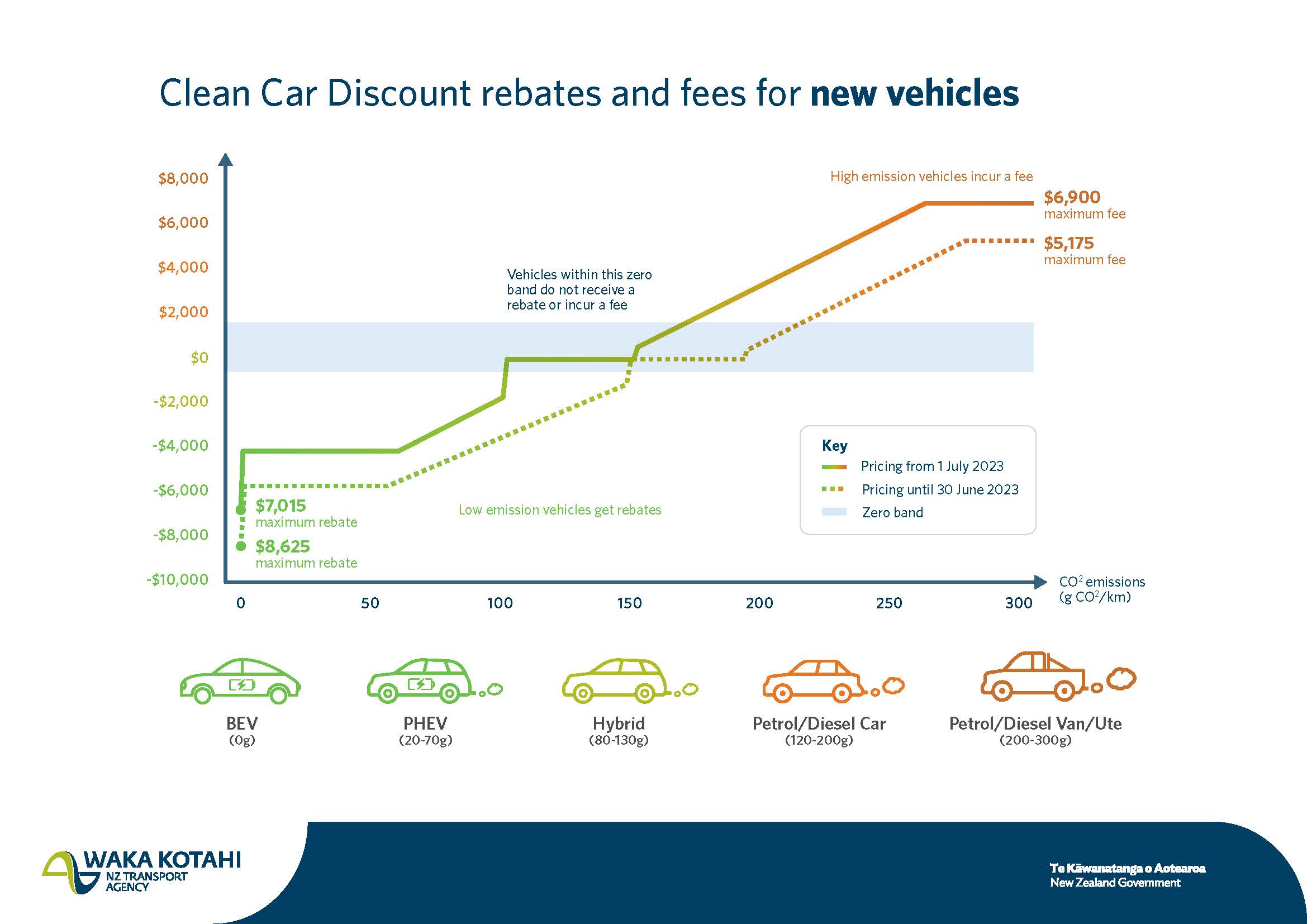
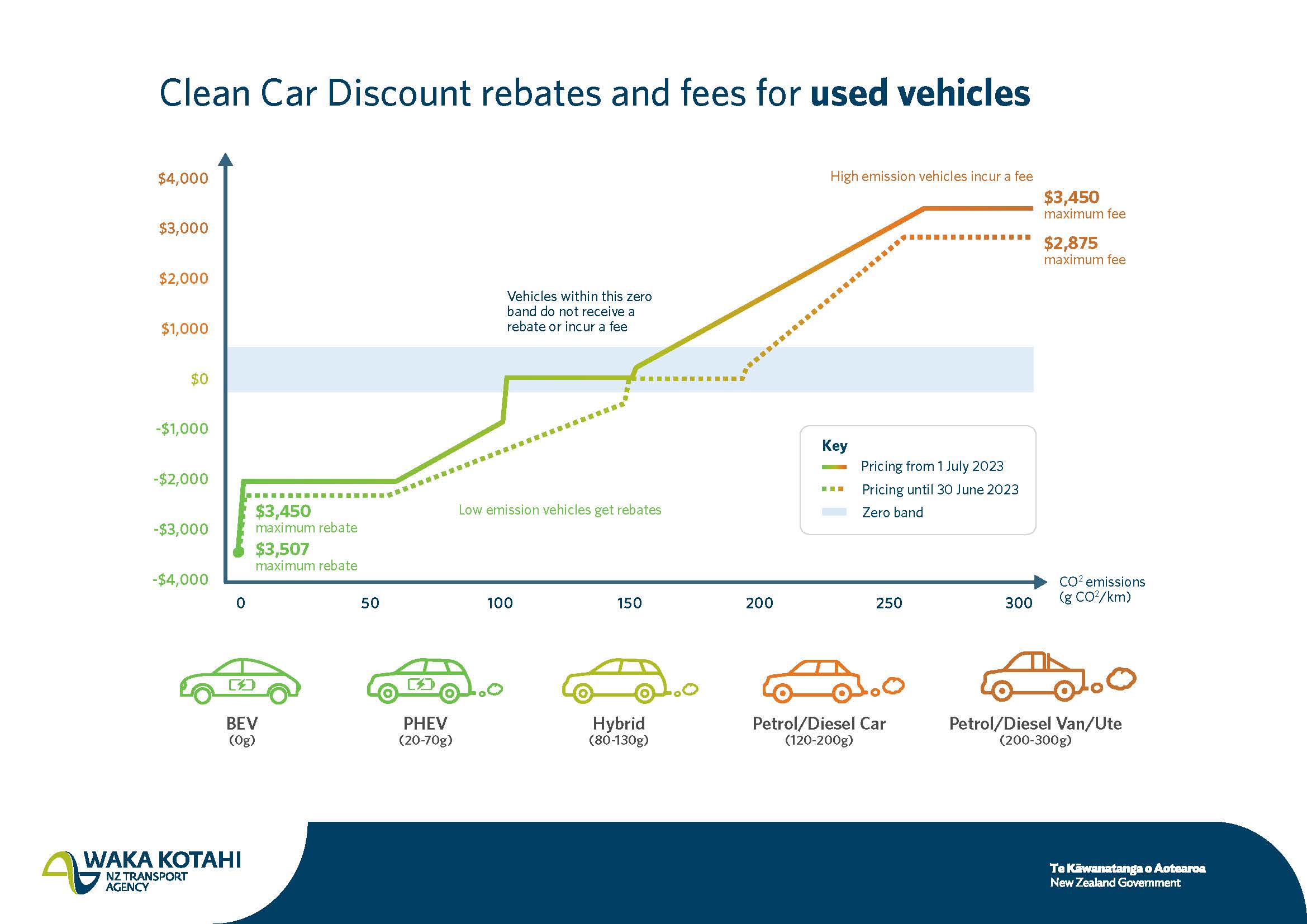
These relate to Clean Car Discount policy changes which came into effect July 2023.
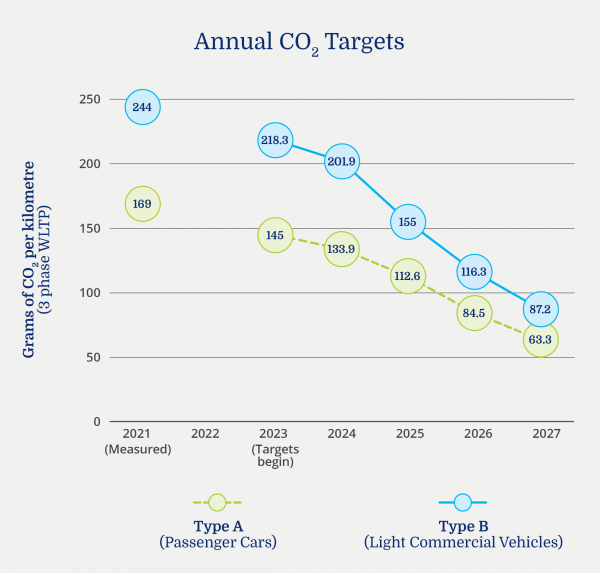
These documents relate to the Government’s decisions on the outcome of the review of the Clean Car Importer Standard. These decisions included setting the Standard’s annual CO2 targets for 2025–2029.
The Government has passed legislation repealing the Clean Car Discount scheme by 31 December 2023.
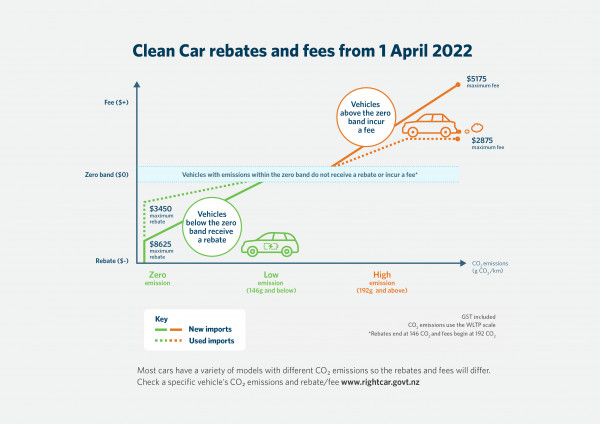
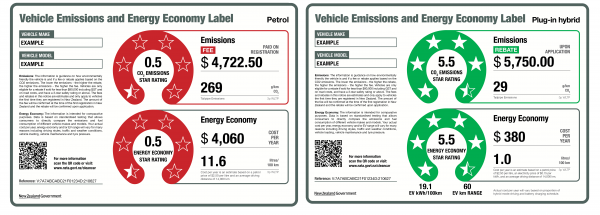
The Clean Car Discount started in 2021 to provide rebates and charges based on carbon emissions for new and used vehicle imports. Repealing the scheme means that:
The relevant legislation is found at the Land Transport (Clean Vehicle Discount Scheme Repeal) Amendment Act 2023.
Below are the documents proactively realeased on the 28th of October 2022
Under section 103 of the Crown Entities Act (CEA) 2004 the Minister of Transport directed the New Zealand Transport Agency to give effect to government policy in the administration of rebates under the Clean Vehicle Discount Scheme.
Due to the increased popularity of zero and low emission vehicles purchases, Clean Car Discount rebates and charges will change for vehicles registered from 1 July 2023.
Below are the documents proactively released on the 19th of January 2023.
The Clean Car Standard and Clean Car Discount were announced in 2021 but aspects weren’t able to be confirmed or enforced until the Clean Vehicles Act came into force in February 2022. The Clean Vehicles Act primarily amends the Land Transport Act 1998 and Land Transport Management Act 2003.
The Government has announced new measures to take action on reducing transport emissions to help meet New Zealand’s 2050 carbon neutral target.
The Government agreed to introduce the Clean Car Standard – a Co2 emissions standard for imported new and used light vehicles. We expect legislation to implement the Clean Car Standard will be introduced in 2021, with the policy taking effect in 2022, although fees on suppliers will not apply until the beginning of 2023
We consulted on the 2 proposals in July and August 2019. The Clean Car Standard is a vehicle carbon dioxide standard, or fuel efficiency standard. It would require vehicle importers to lower the carbon dioxide emissions of the vehicles they are importing. The Clean Car Discount is a feebate scheme that would make low emission vehicles, like electric vehicles and petrol hybrids, more affordable for Kiwis to buy.